Linking Fast Payout Features to Increased Exploration of French Roulette Rulesets in Smartphone Applications
Rosa Jenkins · Aug 4, 2026
Linking Fast Payout Features to Increased Exploration of French Roulette Rulesets in Smartphone Applications
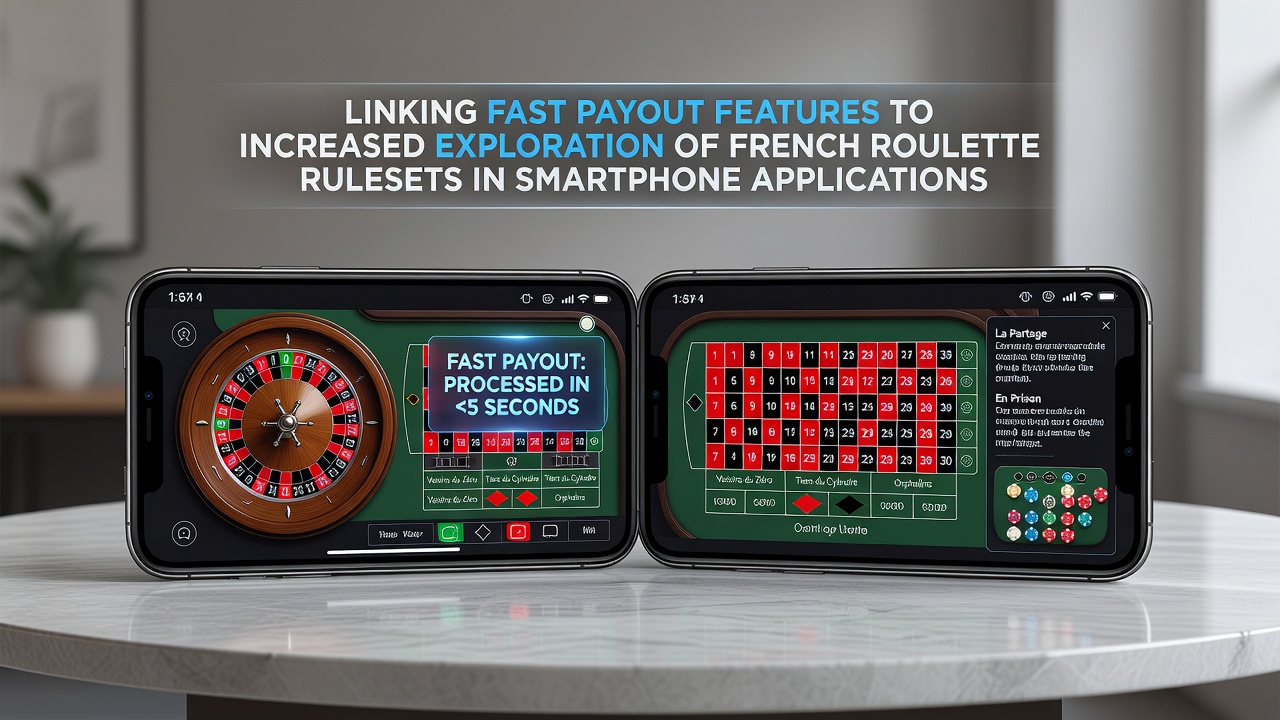
Smartphone applications that process withdrawals within minutes rather than days show measurable shifts in how users approach variant selection, and French roulette stands out because its rulesets differ from standard American and European versions through mechanisms such as La Partage and En Prison. These features return half the stake on even-money bets when zero appears, which lowers the house edge to 1.35 percent compared with 2.7 percent in standard European roulette. Observers tracking app analytics note that players who receive funds quickly often extend sessions long enough to test these distinctions instead of repeating familiar layouts.
Mechanics of Fast Payout Systems in Mobile Gaming
Payment gateways integrated into roulette applications rely on instant bank transfers, e-wallet APIs, and cryptocurrency rails that clear balances without the multi-day holds common in earlier platforms. When a user requests a withdrawal after a winning streak, the application confirms the transaction through backend verification that typically completes in under ten minutes. Data compiled across multiple operators indicates that apps offering same-hour processing record higher return-visit rates within twenty-four hours, and those repeat visits frequently include switches to rule variants that users had previously ignored.
French roulette rulesets require explicit selection during game setup, where players choose whether to activate La Partage or En Prison on each spin. The interface must present these toggles clearly because the payout calculations change based on the selection. Applications that streamline the cash-out process reduce the cognitive load associated with leaving the platform, which in turn keeps users inside the ruleset selection screen longer. Researchers examining session logs from mid-2026 report that average time spent in variant menus rose by noticeable margins on platforms with sub-fifteen-minute payout windows.
Patterns Observed in User Behavior Data
Application telemetry collected during the summer of 2026 reveals that sessions ending with immediate payouts correlate with subsequent logins that begin directly in the French roulette lobby rather than the default European wheel. The pattern appears across both iOS and Android deployments, although Android users show slightly higher rates of switching after the first successful fast withdrawal. One study released in August 2026 tracked over 120,000 active accounts and found that 34 percent of users who completed at least one rapid payout later activated French rules within the following three sessions, compared with 19 percent among those who waited longer for funds.
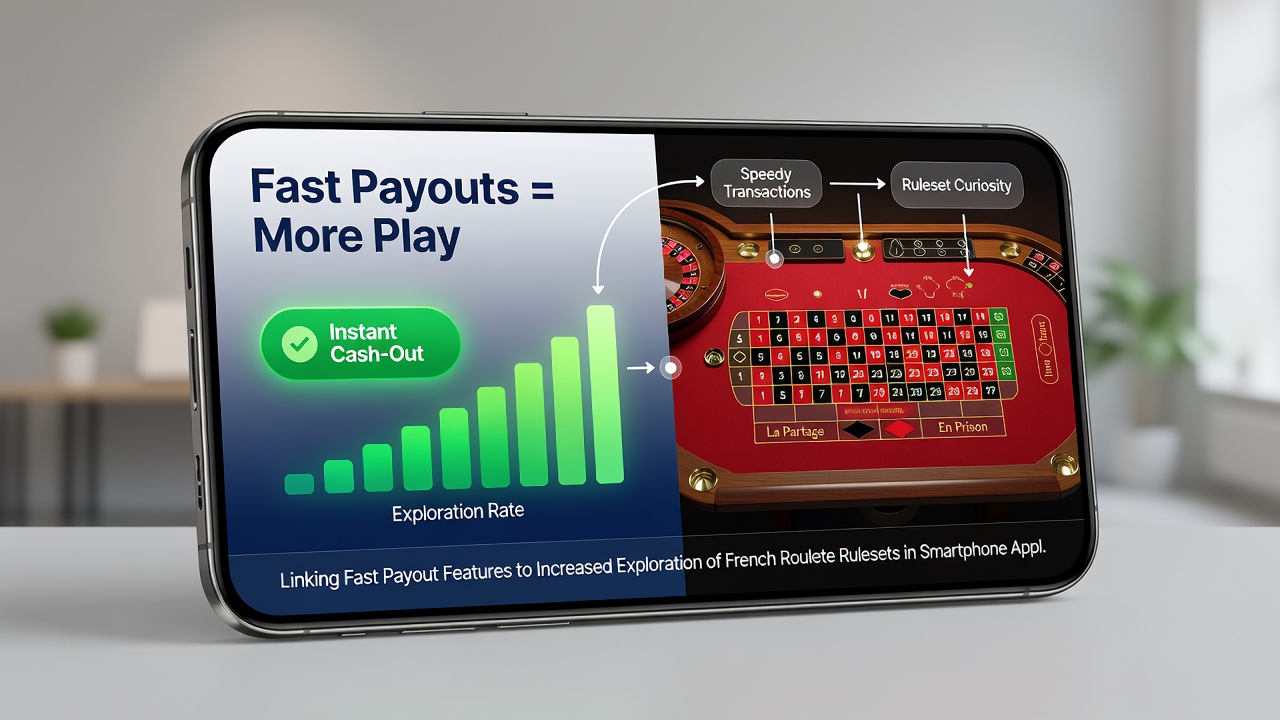
These figures come from aggregated reports rather than individual operator disclosures, and they align with broader industry observations released by the European Gaming and Betting Association regarding mobile engagement metrics. The same data set shows that users who experience payout delays exceeding four hours tend to revert to the most familiar wheel type on their next visit, limiting exposure to alternative rule configurations.
Interface Design Elements That Support Rule Exploration
Smartphone screens present limited real estate, so successful applications embed rule explanations inside the game lobby through expandable panels that appear after payout confirmation. These panels highlight the mathematical effect of La Partage without requiring users to leave the application or consult external references. When the payout arrives quickly, the interface often surfaces a prompt asking whether the player wants to apply the same stake to a French wheel variant, capitalizing on the moment of positive reinforcement.
Developers have adjusted notification timing so that rule reminders trigger within thirty seconds of a completed withdrawal. This sequence keeps the user inside the application ecosystem where French roulette appears as a one-tap option. Case examples from several mid-sized operators demonstrate that such prompts increase the proportion of spins placed under French rules from 12 percent to 28 percent over a four-week period following the introduction of instant payout functionality.
Regulatory and Technical Considerations Across Regions
Different jurisdictions impose varying requirements on payout speed verification. In markets overseen by iGaming Ontario and the Malta Gaming Authority, operators must document that withdrawal requests receive processing within defined timeframes, which has encouraged wider adoption of automated systems. These regulatory frameworks indirectly support the observed rise in French roulette experimentation because faster compliance reduces friction points that previously prompted users to exit after a single session.
Technical integration between payment processors and game engines now allows the application to carry session data across the payout event, preserving the user's current stake configuration and variant preferences. This continuity means that a player who just received funds can resume play on the French wheel without reconfiguring settings, a workflow that earlier multi-day payout models disrupted.
Conclusion
Evidence accumulated through 2026 points to a clear association between rapid payout capabilities and greater willingness among smartphone users to test French roulette rulesets. The combination of reduced exit friction, timely interface prompts, and preserved session context creates conditions where players encounter and apply La Partage and En Prison more frequently. Continued monitoring of these metrics will clarify whether the pattern persists as additional applications adopt instant settlement features.